Tim Wall - 28 / May / 2020
USB And XLR Microphones, What's The Difference?
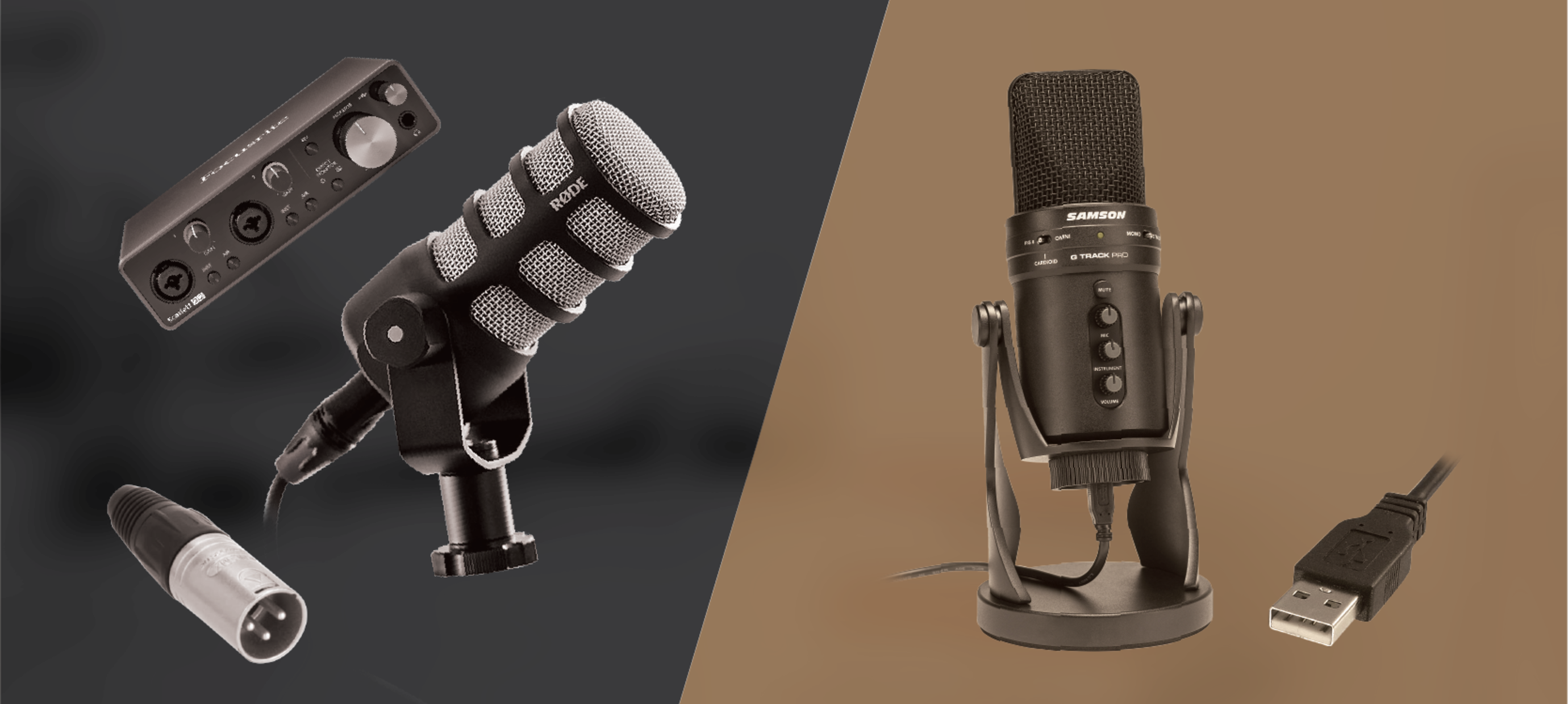
Whether you’re looking to record demos for an album, creating a podcast, live streaming, or wanting to impress your friends and coworkers on your Zoom calls, it’s easier and more affordable than ever to get a studio-like vocal quality at home. Getting into the world of vocal recording may seem intimidating, but it can be simpler than you might think.
There are two main directions to consider when purchasing a microphone setup: using a USB microphone, or pairing an XLR microphone with an audio interface, we'll start with the USB option.
USB Microphones
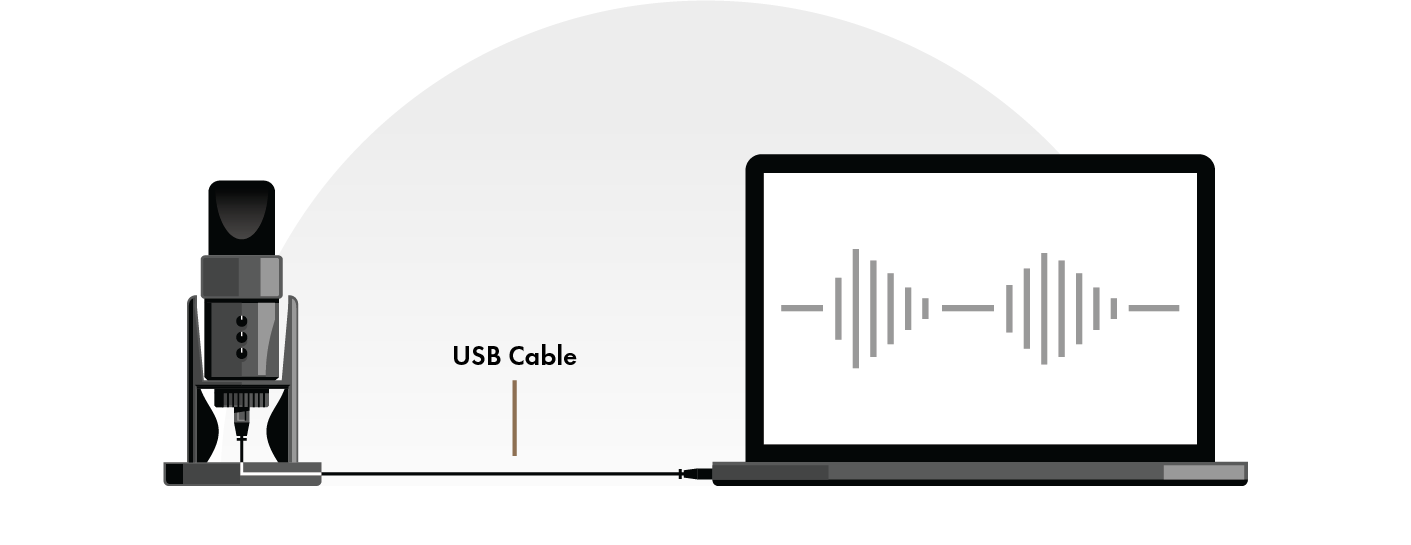
USB microphones are made to be convenient and budget-friendly, and while the quality and versatility are not on par with the XLR microphone and audio interface option, they are a great way to get you started on your vocal recording, at home or on the road. These microphones allow for quick and easy setup, with just one cable going from your microphone into the USB port of your computer, making them a popular solution for at-home podcasters and streamers.
Some microphones, like the Shure MV7i, also include a 1/4” instrument input as well as an on-board mixer to adjust the volumes so you can record two independent audio tracks at one time, making it a great option for recording demos.
One disadvantage to consider:
Computers typically only recognize one USB microphone at a time, so if you’re looking to record a podcast locally with more than one microphone, you might want to consider the XLR microphone and audio interface option.
Pros
- Portable
- Quick, easy setup
- All-in-one hardware
Cons
- Sound quality not as good as XLR mic
- Not as versatile as XLR mic
- Difficult to record more than one USB mic at a time
XLR Microphone with an audio interface
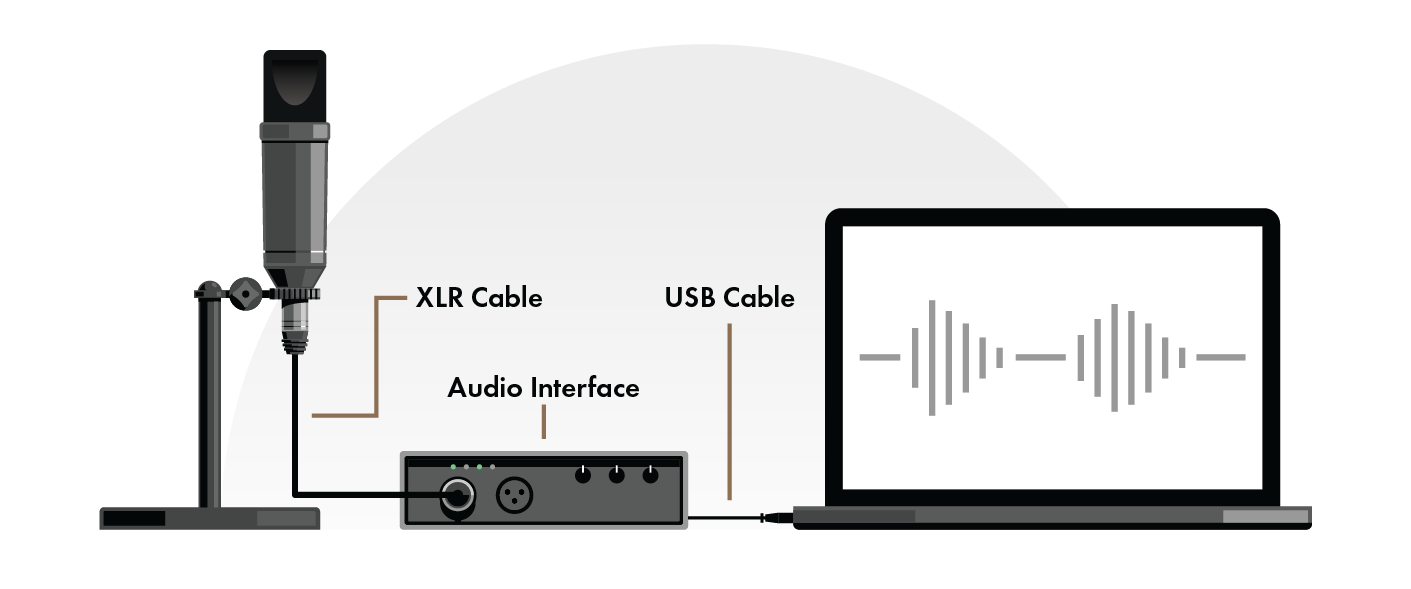
XLR microphones paired with an audio interface is the best option for someone looking for a professional quality setup, with more adjustability and versatility than a USB microphone. While being a more technical and complex setup, it allows you to try different mic and interface combinations to get the sound you’re looking for. The XLR connector is an industry standard, so an XLR microphone will work with any professional recording equipment.
What is an audio interface?
An audio interface is a piece of hardware that acts as a sound card for your computer, connecting to the computer’s USB port. Along with providing inputs for professional microphones and instruments, they also put out higher quality audio to your headphones or speakers, in comparison with a consumer sound card found in a computer. Audio interfaces generally have 1-4 inputs for microphones, making them great for multi microphone setups.
One disadvantage to consider:
With all the components needed to complete this setup, it’s not as ideal to use as a portable option compared to the USB microphone.
Pros
- Professional level sound quality
- Adaptable and customizable
- Often built with durability in mind
Cons
- Larger investment
- More complicated setup
- Lack of transportability
XLR Microphones & Audio Interfaces
Summary
If you are a casual podcaster or live streamer looking for a quick and easy solution for vocal audio, then you may not need to look further than a USB microphone. But an XLR microphone paired with an audio interface is an excellent option for those looking for the highest quality and are planning on going bigger and better in the future.
If you liked this article, feel free to check out the other posts in our Learn section!